
Coming Out Again and Again
Elisha Jacobs-Smith
Kaya ngany-ang kwerl - hello, my name is Elisha Jacobs-Smith. I am a proud Queer Whadjuk Noongar person, and across many Queer Mob spaces, I’m known as Big Lubly. That name, Big Lubly, is not just something people call me, it’s something I’ve been slowly growing into, shaping, and claiming as part of who I am. It represents the person I try to be: bold, warm, visible, and full of love, both for others and for myself.
I currently work in senior leadership at Murdoch University as the Senior Training and Engagement Manager, First Nations, in the Office of the Pro Vice Chancellor First Nations, based at the Kulbardi Aboriginal Centre. The Centre is a powerful place and one where identity, culture, and belonging are not just acknowledged, but deeply celebrated. It is a space that invites people to show up as their whole selves. For me, that has been both a gift and a challenge. Being in a place that encourages authenticity often leads me to reflect more deeply on myself, asking the question: Who am I, really?
Alongside my work at Murdoch, I am involved in my family business, Indigenous Economic Solutions Pty Ltd, and I help facilitate Camp4Mob as a space dedicated to supporting Queer Mob to reconnect to Country, culture, and to deepen belonging. I also hold various governance and advisory roles across boards and committees. From the outside, it might look like I have a strong sense of identity. But the truth is, my journey has been layered, complicated, and ongoing. I am constantly coming into myself, again and again.
— —
As a young boy, I was raised in a close-knit Noongar family. My mum was a single parent raising three kids, myself, my brother, and my sister, but we were never alone. In Noongar family ways, we are held and surrounded by many mothers. I had four aunties who were also my mums, and all their children were my brother cousins and sister cousins. Family was everywhere, and it was very strong.
My grandparents, however, were devout Christians, and the influence of church and Christian teachings was a big part of my upbringing along with Noongar culture. We were taught clear ideas about gender roles including what men were meant to be, what women were meant to be, and how relationships were supposed to look. These teachings shaped a lot of how I saw the world in my early years.
One of my mums is a prominent lesbian, and I still remember when she came out. I was only young at the time, and I recall how confusing it felt when we were told she had a girlfriend. It clashed with everything we had been taught through church. But at the same time, I spent a lot of time at her house on weekends. We had fun, we went out, laughed, and just enjoyed life. Her and her girlfriend who I acknowledge as my aunty too would sometimes say to me, “You’re like us.” I would ask what they meant, and they’d say, “Not exactly like us, but similar.”
I didn’t fully understand what they meant back then, but something in me recognised that feeling and that sense of being different, even if I didn’t yet have the words or understanding for it.
Growing up Noongar was something that was always celebrated in our family. My mum and stepdad ran a dance group called Baalup Ni Katidjin - People Stop, Look and Listen. We danced at community events and even at weddings for people we didn’t know. It was something special. We were seen, valued, and respected in Mandurah.
Later, my family started a tourism business called Kwilana Dreaming, and my siblings and I were involved in delivering tours and performing dances for visitors. I absolutely loved it. It gave me a strong sense of pride and connection to culture from a young age. Looking back, I know that I was incredibly fortunate. Many people I’ve met didn’t grow up with that same access to culture or that same encouragement to embrace who they were.
At the same time, though, another part of me was becoming more visible, whether I liked it or not. I was naturally drawn to what people would label as “feminine” things like playing with dolls, expressing myself in ways that didn’t align with expectations of boys. There was no hiding it. My feminine identity was obvious, even before I understood it myself.
— —
As I got older and further through school, I began to realise that I was different from the other boys. But it wasn’t just about being different, it was about being made to feel like that difference was wrong.
Kids at school would call me a “half-caste” and say I wasn’t a real Aboriginal. The way they said it carried so much weight. It wasn’t just words, it was tone, judgement, dismissal. I internalised that. I started to believe that something about me was not enough, or not right.
At the same time, I knew there was another part of me that I hadn’t fully named yet, my queerness. And I remember thinking: If they already say these things about me being Noongar, what would happen if they knew I was Gay too?
That was the moment I first felt shame for who I was.
That shame stayed with me for a long time. It shaped my decisions, my behaviour, and how I saw myself. I tried to be someone else, to fit in, to be acceptable, to avoid attention. But no matter how hard I tried, I never truly felt like I belonged anywhere. I was always performing, always code switching, always adjusting, always holding something back.
— —
My journey was not easy. There were multiple suicide attempts, periods of emotional shutdown, and times when I felt completely disconnected from myself. These experiences left scars, both visible and invisible, and I still carry them with me.
But I don’t carry them as shame anymore. I carry them as reminders.
They remind me of how far I’ve come. They remind me of my strength, my resilience, and my capacity to keep going even when things felt impossible. And they remind me that coming out and coming into yourself, is never simple or easy.
For some people, coming out is a moment. For others, like me I guess, it is a lifelong process. It is something you do over and over again, in different ways, at different times in your life.
In my adult life, I eventually found a level of comfort in identifying as a Gay man. I built a life around that identity. I’ve been in a loving relationship with my partner for 12 years, and we are very happy together.
Reaching that place of comfort was significant. It allowed me to finally feel stable, grounded, and safe in who I was. And when you reach that point, when your basic needs for safety, belonging, and love are met, you begin to open new doors within yourself.
I recently learned about Maslow’s Hierarchy of Needs through a colleague, and it really resonated with me. It helped me understand that once those foundational needs are met, you can start to explore deeper layers of yourself, your identity, your purpose, your truth.
For me, this connected with realisation that I wasn’t finished figuring myself out.
— —
A few years ago, I was in a space where I was actively learning how to be an ally. Yes, an ally ironically, while still connecting parts of myself. During a conversation, a colleague introduced the concept of gender fluidity.
For the first time, I heard language that actually resonated with my lived experience. The words about gender not being fixed, that it can shift and change over time, that it doesn’t have to sit neatly into one category, it was like something clicked for me.
Suddenly, things started to make sense.
People who know me have seen my style and expression change countless times over the years. I never planned it, it wasn’t intentional. I would just go with what felt right in the moment. But it also caused me stress. I used to try so hard to fix my identity into something consistent. I’d plan outfits days in advance, only to put them on and feel completely wrong. That feeling was uncomfortable, and unsettled, and it often triggered an emotional response that I didn’t understand at the time.
Now I know that my gender expression had shifted. And instead of allowing that shift, I was fighting it.
I used to look at other Gay men and think, Why do they all look the same? Why can’t I just be consistent like that? It genuinely distressed me. I thought something was wrong with me.
But nothing was wrong. I just didn’t have the words yet.
— —
After coming out as GenderFluid and sharing that with my friends and family, I entered another layer of comfort. But as I settled into that identity, I began to question another assumption I had always held, that I was Gay.
And honestly, I laugh about it now. Because “Gay” had been a way for me to simplify myself. It was a label that felt close enough, acceptable enough, understandable enough for both myself and others.
But it wasn’t the full truth.
Through my work with Camp4Mob, being surrounded by other Queer Mob on their own journeys, I started to acknowledge something I had previously brushed off or joked about. I realised that my attraction wasn’t limited in the way I had thought.
I do feel attraction to women. And more broadly, my attraction exists across multiple gender identities. That truth had always been there, I just hadn’t allowed myself to fully sit with it.
Now, I describe myself as a Genderfluid, Homoflexible Noongar person. Homoflexible feels like a more accurate way to describe my experience, and it acknowledges that while my primary attraction is to men, it is not exclusive.
For the first time, I feel like I have language that actually fits better. I don’t have to explain myself endlessly or justify my identity. I can say, “This is who I am,” and trust that the words can carry the meaning.
— —
Having language matters. It allows us to understand ourselves, to communicate with others, and to feel less alone.
I often think about the people who came before me, those who didn’t have access to this language, who didn’t have safe spaces, who didn’t have the opportunity to connect with their identities openly. Some lived in times when it was unsafe or even illegal to be themselves.
And for many people, that is still the reality today.
That’s why I don’t take this for granted. Being able to name who I am is powerful. It’s liberating. And it also comes with responsibility.
— —
Through all of this, one thing has become very clear to me: before you can come out, you have to come in.
You have to sit with yourself. You have to feel it, question it, challenge it, and slowly accept it. That process is not quick, and it’s not easy. But it is necessary.
Now, I use my own journey as a way to support others. Whether it’s through my work, Camp4Mob, or the spaces I’m part of, I want to help create environments where people feel safe enough to begin that inward journey.
Because once you start to come into yourself, everything changes.
— —
So here I am, still coming out. Still learning. Still growing. Still shifting.
Coming out is not a one-time event, it is something that happens over and over again, each time you connect with something new about yourself, each time you step into a deeper truth.
And right now, this is my truth:
I am a proud, Genderfluid, Homoflexible Noongar person.
I say it loudly. I say it proudly. And I say it knowing that this may not be the final version of me, and that’s okay.
Because I am allowed to come further into myself.
I am allowed to change.
And I am allowed to keep coming out, again and again.
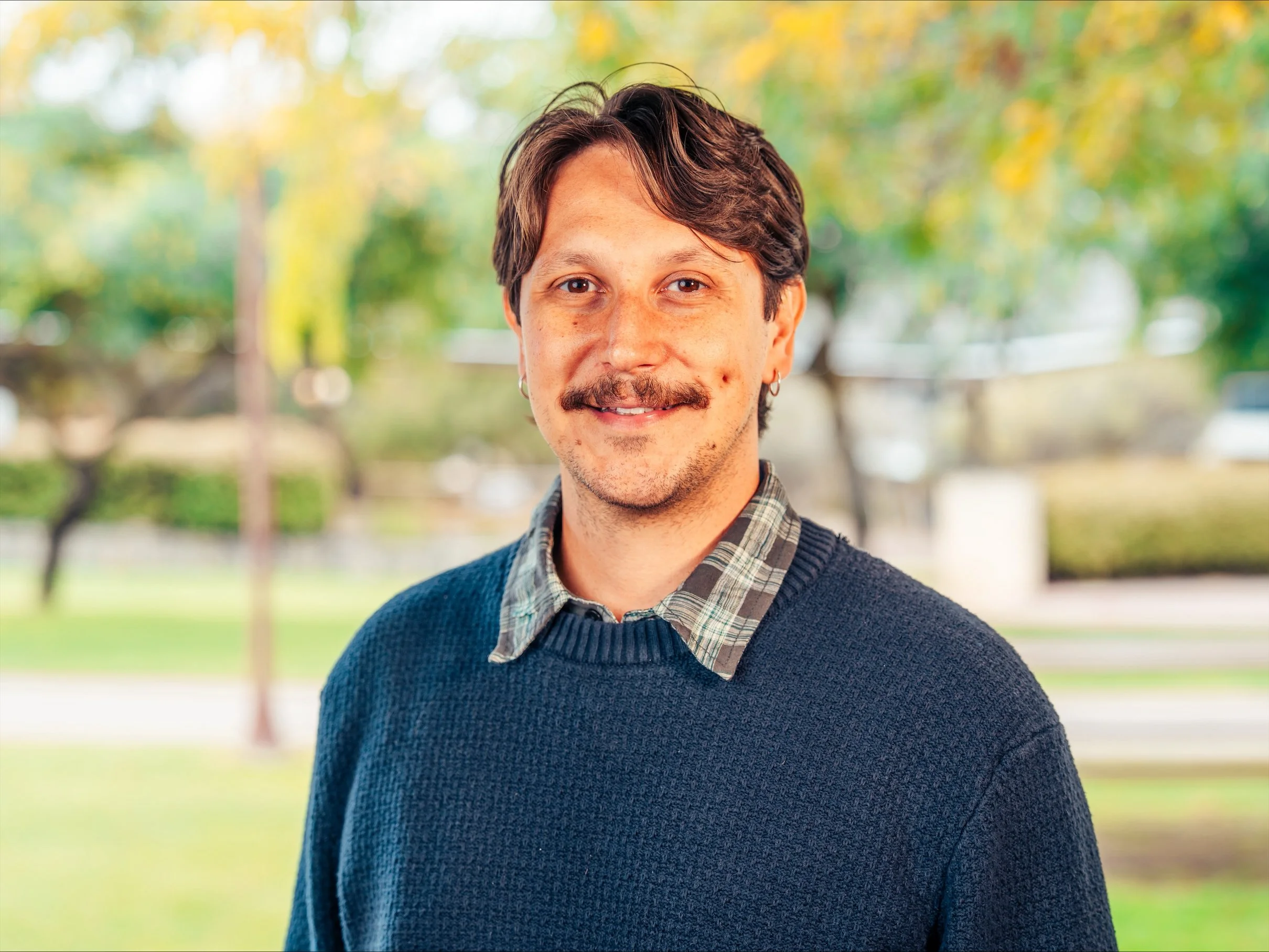
Elisha Jacobs-Smith is a proud Queer Whadjuk Noongar from the Jacobs family. Elisha's work is grounded in culture, and a belief that people thrive when they feel seen, valued, and connected to who they are.
As Senior Training and Engagement Manager, First Nations at Murdoch University, Elisha leads initiatives that strengthen First Nations leadership, cultural capability, and meaningful engagement. Elisha is passionate about supporting people to reconnect with culture, Country, identity, and belonging through community, truth-telling, and shared learning.
Drawing on both lived experience and cultural knowledge, Elisha brings warmth, authenticity, and a deep commitment to creating spaces where people can show up as their whole selves and continue their journey of growth, healing, and connection.