
A Month in Boorloo: Reflections from the 2025 Patricia Kailis International Writing Fellow
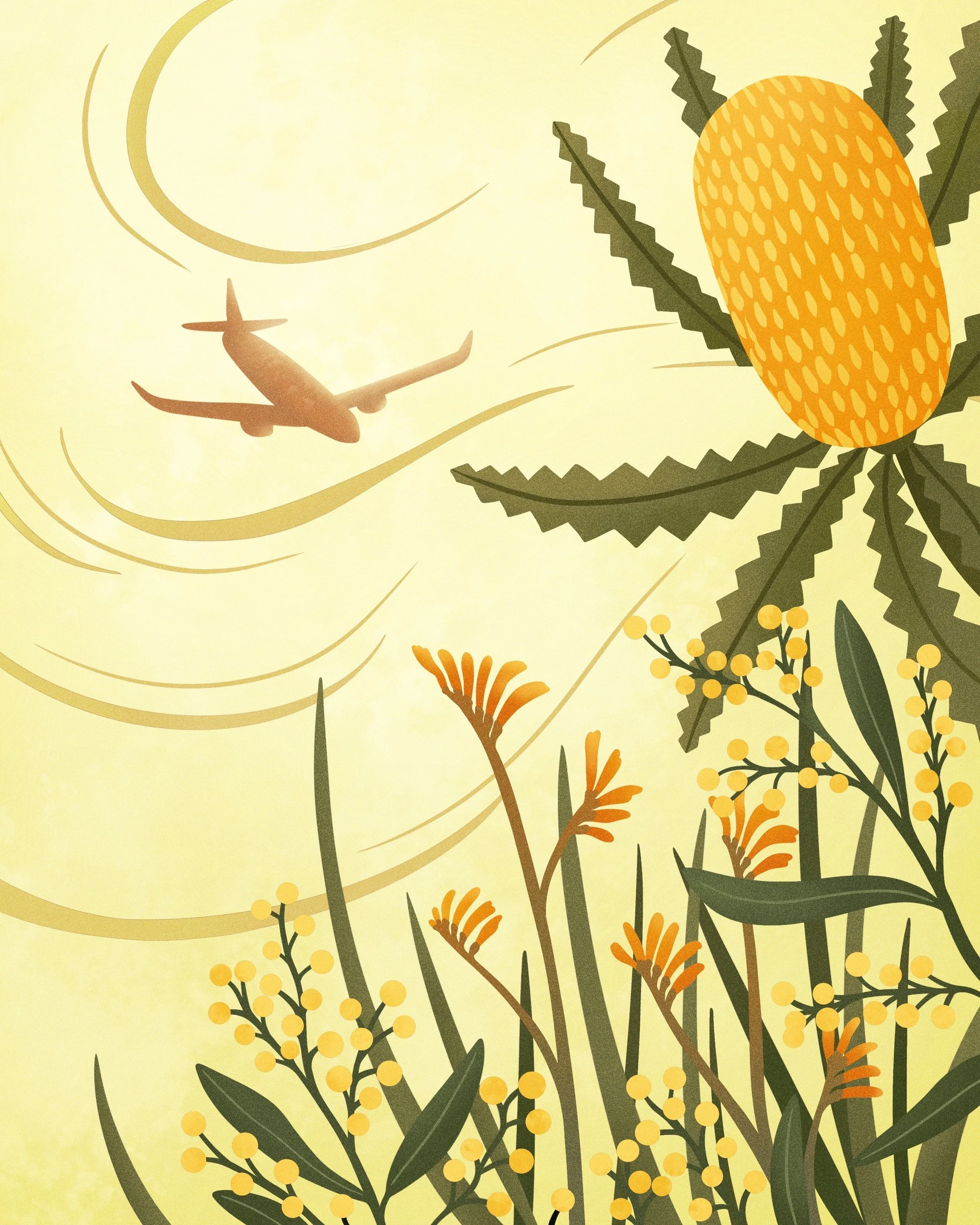
It is warm and sultry when I arrive in Boorloo (Perth), and a fierce wind sends the plane bouncing off the tarmac a few times, before it finally makes a landing. It is unusual for this time of the year, the Noongar season of Kambarang, with warm sea breezes, and the first flush of wildflowers. This I knew, from the notes prepared for my first trip to Australia - I had been invited by Centre for Stories to spend three weeks as the recipient of the 2025 Patricia Kailis International Writing Fellowship in Boorloo.
I first heard of the fellowship through my daughter who persuaded me to send in an application - she believed it reflected a lot of my own ideals about community and inclusion. After two published non-fiction books, and writing for several publications, I had started writing a novel, just before Covid struck. My three daughters and grandson returned from distant corners of the world; our home was filled with music, laughter, popcorn and movie nights once again, but there was little time, or the luxury of space - even in my head - for writing.
I live in Kodaikanal in the mountains of South India, a small town settled by Christian missionaries from far-flung posts in the plains to escape searing summers. These were the American, European and a few Australian missionaries who transformed Kodaikanal into a diverse international town.The rough draft of my novel had an environmental theme with a mysterious Australian connection, but, there I faltered needing more, to flesh out the story.
Now this vast continent with astonishing landscapes and diverse human stories seemed to be beckoning me. And, November, the month of the fellowship, was a time I was free from commitments, with no distractions.
Did I fit the bill? I wondered, as an older author who had published later in life, I imagined writing fellowships were designed for young writers. But the spirit of inclusion thatCentre for Stories embodies, seems to think I did.
I spent my first morning at the library at the Centre for Stories, poring through their impressive collection of Aboriginal literature, short stories, poetry, art and non-fiction. This became a pattern, mornings spent at the Centre for Stories, reading, taking copious notes, stopping for lunch with staff in the meeting room, afternoons at the museums or parks and invariably some event in the evening. My hotel, just around the corner from the Centre for Stories was within walking distance from the museums, art galleries and the State Library of Western Australia.
One evening, I heard Australian journalist Peter Greste speak at the annual lecture for PEN Perth on the debate democracies cannot afford to lose. It was a powerful and moving speech that reminded me about the shrinking space for free thought and dissent in my own country - the “grey zone” that contradicts democratic freedoms. Greste, who was imprisoned in Egypt with other journalists and released later in 2015, spoke about this diminishing space. The haunting image of the journalists locked in a caged enclosure in a courtroom in Cairo is a grim reminder of the growing persecution of independent thinkers across the world.
The opportunity to visit Broome in the Kimberley was one of the highlights of this fellowship. A new and exciting landscape, where stories of land and belonging, devastating loss, and the will to survive are familiar. I heard from Robert Dann, a Nyul Nyul man, on the story of his own mother’s life, one of the Stolen Generation taken away as children, and of the loss of traditional knowledge.
A young Aboriginal songwriter sang softly as she performed the smoking ceremony on the red sands of her people’s ancient lands, reminiscent of similar rituals of welcome and purification in India. She spoke of skins and taboos drawing a circle on the sand to illustrate the distinctions. Our cultures were not so distant after all.
I also met writer-illustrator Robyn Wells, who took me around her beloved town and her delightful home where we exchanged recipes for mango chutney. She had arrived in Broome some decades earlier and stayed on to make a home and a life in this ancient land with Australia’s most multi-cultural communities, now her own country.
At the Centre for Stories, I met fellow writers, from young ‘hot-deskers’ and students practising their craft to published writers like Sisonke Msimang. Over dinner,we shared stories. I heard about Sisonke’s family, and her early life with parents who were members of the African National Congress, of meeting Nelson Mandela as a child and the family’s flight from South Africa.
I met irrepressible landscape architect, Leena Bakshi, with her group of friends - all landscape architects and artists, and spent a day with PEN Perth Chair and academic, Krishna Sen, who showed me her favorite spaces in Fremantle.
An evening spent with writer, Rashida Murphy and her husband Mike, when she cooked a delicious Bohri meal evoked memories of her life in India, family and their own life together.
I spent a weekend at Caroline and John Wood’s country home in Margaret River with poet Ranjit Hoskote and Nancy Adjania, a time to unwind and share stories. Curled up on a sofa as a sudden storm raged outside, I read the writer Sally Morgan’s account of her grandfather Jack McPhee’s life as a 'mardamarda' - half white. I learnt more about skin groups, new words like the Aboriginal word ‘Urrru’ and Tamil ‘Ooru’ both meaning 'place' - land, home, belonging.
As a landscape designer and a keen observer of the natural world, the geography of Western Australia, with much of its flora and fauna endemic to the region, is fascinating. The second spring signals kangaroo paws, acacias, hoveas and jacarandas to blossom along with a dazzling array of wildflowers. Some, like the acres of eucalyptus swaying in the fierce wind, the wattle trees with little posies of creamy-yellow flowers, and the avenues of jacarandas remind me of home - for the British had brought these water-intensive trees over to our mountains, disastrous for the fragile eco-system.
At the Indian Ocean Heritage Conference in Reunion Island some years back, I learnt the importance of writing about environmental stories that are relatable. That’s when storytelling becomes a valuable tool to convey the consequences of climate change and ecological challenges to a larger audience.
My essays and articles on the environment often focus on the small and seemingly unimportant events that inform us about a bigger story, the importance of conserving what we have left, and the regeneration of natural landscapes. A flower that blooms plietisentially or the bison that have moved to urban spaces and display rogue behavior, may seem inconsequential, but they are symptoms of a problem. I hear similar narratives here too, of a changing landscape.
Over the following weeks, I would find myself listening to stories from all corners of the world, stories of love, loss, persecution, immigration and recipes that were carried from the old world, as well as the foods that sustained them in their new lives. Stories of hope and dreams that are familiar, and some far removed from my life. But these are the bridges that keep us connected, and deserve space in our stories.
At the ‘Courtyard Yarning’ event, I saw how communities come together to create a welcoming space for sharing stories. Storytelling, oral or in writing, has the power to open dialogues and take it further. One of the Aunties at the yarning said something that stays with me: “Shame dies when stories are told in safe spaces”. This is why the world needs nurturing environments like the Centre for Stories, as a medium to find common ground, empathy and understanding about the complexities of the human condition and the planet we share.
I met Dr George Kailis, who had set up the generous Patricia Kailis International Writing Fellowship in memory of his mother, Dr Patricia Kailis - a philanthropist and academic. The story of his own Greek immigrant family and their pearling and fishing business is legend in these parts. Dr Kailis is a renowned food critic and an engaging raconteur, and despite a busy work schedule, he makes time to attend the ‘In Conversation’ event on the last day of the fellowship, with members of his family.
In conversation with Mala Dharmananda, I was pleased to be described as a renaissance woman - as I believed myself to be: a woman who pushes herself to “expand the limits of success” in multiple interests, with “no pedigree in the field and no rightful claim to succeed”. The trajectory of my own life had certainly expanded my interests and pushed me to discover my potential.
Looking back at this month, I see how writing fellowships like this, can give writers in any discipline, time for research, the exposure to professional networks and even dedicated writing time. The opportunity to meet and exchange ideas with a network of writers, academics, professionals from all walks of life is an invaluable asset for growth.
Did I get time to write, to work on my book? Not much, I was too busy experiencing life, observing, taking notes. The writing will come, undoubtedly it will be shaped by some of the experiences I take from here. Some will influence and manifest in the many facets of my life. I leave with knowledge that may inform an environmental story, or an article on wild foods or sustainable living.
Importantly, I leave with renewed interest and a fresh perspective on my writing.
Lathika George
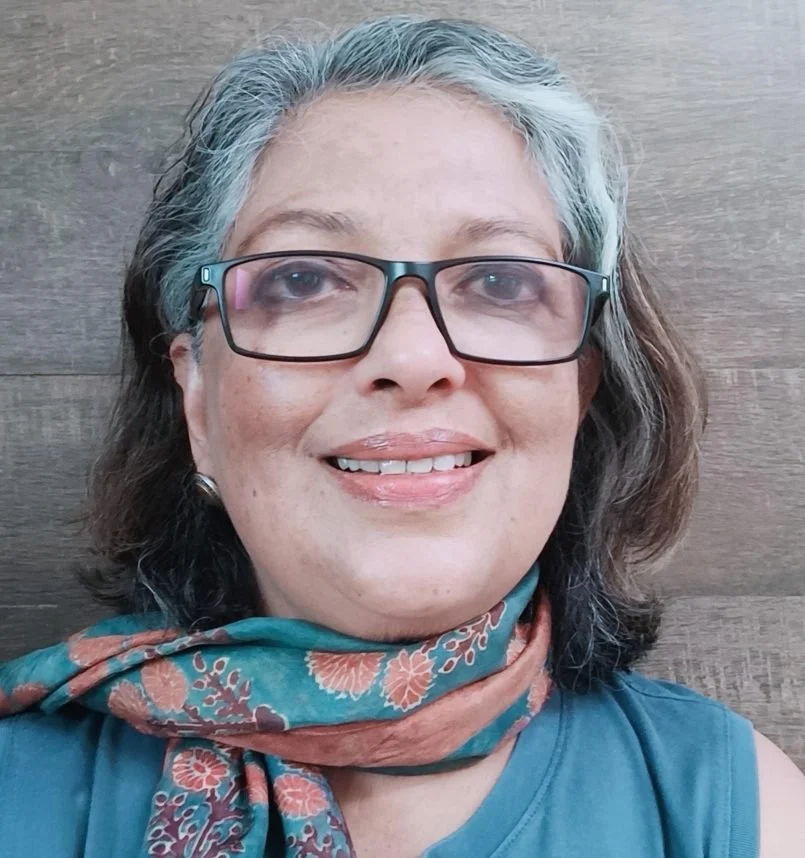
Lathika George is a landscape designer, organic gardener and environmentalist. She is the author of The Suriani Kitchen/The Kerala Kitchen, and Mother Earth, Sister Seed, Travels Through India’s Farmlands. She also writes about food, farming and environmental issues for various publications, and is a participant in community and ecological work in the Palani Hills in South India.