

Rainbow on Toast: Reading Between the Colours
Laetitia L Thompson
I have spent much of my life thinking about description without even realising it until I had to do it for my job.
As a disabled person, I was often described before I had the chance to describe myself. Medical records, assessments, government forms, random strangers on Transperth. Everybody seemed to have an opinion about which details were important.
I mean, I can't really blame them. A lot of the time it was part of their job. Boxes need to be ticked, statistics need to be collected, and who doesn't love labels in Latin? Aglossia adactylia. Sounds much cooler than "no hands, no feet."
As a queer person, I learned something different but related. People are very good at constructing stories from incomplete information. A few visible details become assumptions, and assumptions become narratives.
I guess it was inevitable that I became obsessed with the question of what deserves attention.
When I was a kid, I carried around a giant book on dog breeds and memorised every detail. I could identify them on sight and happily recite facts whenever need or whim struck. I was absolutely obsessed with dogs. I knew Chow Chows have blue-black tongues and that pugs were bred to have wrinkles resembling the Chinese character for "prince".
Looking back, perhaps that should have been a clue.
It took over three decades and a counsellor before somebody suggested, "Laetitia, I think there's a possibility you could be neurodivergent."
Thanks, Joshua.
I probably should have realised that a person who spent her childhood memorising categories would eventually end up fascinated by the limits of them.
Categories can be useful, but they can also leave important things out.
Long before I started describing objects, other people were describing me.
People would often assume I was a thalidomide baby.
And you know, I get it. For many people of a certain generation, that was their first point of reference when they met someone without hands and feet out in the wild.
Still.
Barbara.
Do I really look sixty?
Description, I learned early, is never just about information. It shapes how people understand who belongs, who matters, and who gets to be seen as fully human.
It would be years before I realised all of these things were connected, and when I finally did, it was through antique jewellery.
A few months ago, I gave a presentation at a digital accessibility conference on art, alt text, and aesthetics.
The presentation ended but the hyperfixation did not.
Alt text is a written description of an image, most commonly used by people who are blind and low vision through screen readers.
The more I thought about it, the more I found myself wondering whether there was a gap between describing an artwork and describing the experience of looking at it. They aren't always the same thing.
The idea was simple. I would take beautiful objects, mostly antique jewellery, and try to describe them.
I knew it would be challenging. Even the most straightforward description involves choices.
I found myself spending far too much time staring at objects, paralysed by a question that had always existed in the background of my work but had never demanded quite so much of me before.
What deserves attention?
Most objects, I discovered, do not have the courtesy to tell you what matters most about them.
Take a Victorian ring containing a tiny gold bird hidden inside smoky quartz.
Is it a bird ring, or a smoky quartz ring that happens to contain a bird? The gemstone dominates the piece. It is the first thing most people notice. But once I saw the bird, I couldn't stop looking at it.
Or take a Georgian eye miniature.
At first glance it appears to be exactly what it sounds like. A painting of an eye.
But it isn't really an eye at all. It is a portrait. A person reduced to a single feature, intended to represent an entire human being.
Once I understood that, I couldn't stop thinking about it.
Nothing about the object had changed, but the way I saw it had.
Perhaps that is also why I began collecting antique jewellery.
I am adopted.
Much of my family is adopted.
Like many people, I once assumed I would have children of my own. Instead, I found myself thinking about family in a different way.
For a long time, I thought legacy was something that happened naturally. Parents passed things to children. Families handed stories down through generations. Objects accumulated history simply because there was always somebody to inherit them.
My experience made me suspicious of neat stories about family.
It also made me think differently about inheritance. Not money or property, but memory.
The collection began as a love of beautiful objects, but it became something more intentional. Each piece is destined for somebody I love. My nieces. My nephew. The children of close friends who have become family. My person.
I do not expect them to treasure the same things I do. They may not care about dragon stick pins or Art Deco geometry with the same eye that I have. They may not remember the dates, the historical periods, or any of the notes I have carefully recorded about them.
That is fine.
What I hope survives is the understanding that these objects were chosen deliberately. That somebody was thinking about them long before the jewellery ever reached them.
My sister is adopted too. In many ways, our family is still relatively new. There are no centuries-old heirlooms being passed down through the generations.
So this is my way of beginning that story.
Every heirloom was new once. Every family tradition had to begin with somebody deciding that a particular object, story, or memory was worth carrying forward.
All of the objects I collect are already carrying the traces of previous lives. A World War sweetheart brooch. A century-old ring. A piece of jewellery that has already survived one family and is now finding its way into another.
I like the idea that they will outlive me too.
After all, we spend a lot of time trying to understand people through what they leave behind.
The question followed me into mourning jewellery, Art Nouveau brooches, a Napoleonic pansy ring, and eventually a piece of iris glass that resisted description altogether.
I spent fifteen minutes trying to describe it.
Eventually, my notes read:
"A smear of rainbow over toast."
To be clear, this was not accessibility professional Laetitia or history major Laetitia. I was trying to describe a feeling.
The rainbow seemed to streak across the glass rather than belong to it, bright bands of colour drifting over a warm golden glow.
The problem was not identifying the colours.
I was trying to read between them.
And that is where the project stopped being about jewellery.
Human rights conversations often focus, understandably, on survival. Safety. Housing. Healthcare. These rights matter.
But survival is not the same thing as living.
People deserve beauty too. They deserve access to art, culture, history, joy, and wonder.
The right to participate in culture is also a human right.
Description is often treated as a technical exercise. A matter of accuracy. For concise alt text, accuracy is usually the goal. But art asks different questions.
Every description involves choices. The moment I start writing, I have to decide what matters, what comes first, and what can be left unsaid.
Description is never neutral.
As a disabled person, I know what it is like to have other people decide which parts of you deserve attention. A diagnosis becomes the headline. An accommodation becomes the defining characteristic. A visible difference becomes the whole story.
The person disappears behind the description. The description remains. The person becomes harder to see.
As a queer person, I often find myself approaching history the same way I approach alt text.
Queer people become experts in reading between the lines because so much of our history survives there.
We inherit archives full of omissions, euphemisms, coded language, and carefully edited truths. A photograph without context. A relationship described as friendship. A life translated into something safer and more acceptable to the people recording it.
Sometimes enough survives for future generations to piece the story together.
Sometimes it does not.
Like the eye miniature, an entire life can be reduced to a fragment and expected to stand in for the whole.
History is full of people who were present but not fully described. People who were seen without being understood. People who existed in plain sight and yet somehow disappeared from the record.
The absence of description becomes a form of erasure.
The story exists, but access to the story does not. Sometimes the record survives. The context does not.
Antique jewellery and queer history ask similar things of us.
Look closely.
Resist easy conclusions.
Be careful about the stories you build from incomplete information.
An eye is not a portrait. A diagnosis is not a person. A label is not a person.
They tell us something, but they never tell us everything.
As someone who works in accessibility, I encounter a different version of this problem every day.
Most people think accessibility is about compliance, standards, policies, and checklists.
Sometimes it is. All right, quite often it is.
But the longer I work in the field, the less interested I become in compliance and the more interested I become in whether people feel they belong.
Whether we are writing alt text, describing an artwork, recording a life, or deciding which stories are preserved, we are deciding what deserves attention.
Those decisions matter.
Human rights are not only about survival, but they are also about belonging.
People deserve more than bread alone. They deserve roses too. Art, culture, history, joy, wonder.
Queer representation in fiction is becoming more common, and that is worth celebrating.
But we deserve more than imagined futures.
We deserve access to our pasts as well. Not simply to celebrate them, but to understand that we were always here.
To know that people like us existed before we did. To know that queer history did not begin the moment society started paying attention to it.
Sometimes it survives in plain sight. In a letter. In a photograph. In two women buried together beneath the same headstone. In a relationship described as friendship because that was the safest language available.
We deserve to inherit those stories too.
To know that our stories deserve to be told fully rather than in fragments.
For queer people, that means more than legal recognition. It means seeing our lives reflected honestly in the stories we inherit and the stories we leave behind.
For disabled people, it means being understood as whole people rather than collections of diagnoses, accommodations, or assumptions.
For everyone, it means being granted the dignity of complexity.
If I am honest, there is probably something selfish in my collection too.
I want these objects to outlive me because I want some part of my story to survive too.
I want somebody, decades from now, to hold a ring or a brooch and ask where it came from.
I want them to know there was a person who loved beautiful things. A person who spent far too long trying to describe opals. A person who cared deeply about stories.
A person who was here. Not remarkable or famous. Just present.
Perhaps that is why these questions feel so familiar to me.
What gets passed down and what gets lost.
Which stories survive.
Who gets remembered, and who gets reduced to a handful of facts.
I do not think I am alone in wanting more than survival.
I want somebody in the future to know that I existed as a whole person rather than a collection of facts.
Which may explain why I keep returning to beautiful objects.
Not because jewellery matters more than people, but because it taught me something about them.
Seeing is not the same as understanding. Facts are not the same as stories. Visibility without context is often another kind of absence.
What we choose to notice matters.
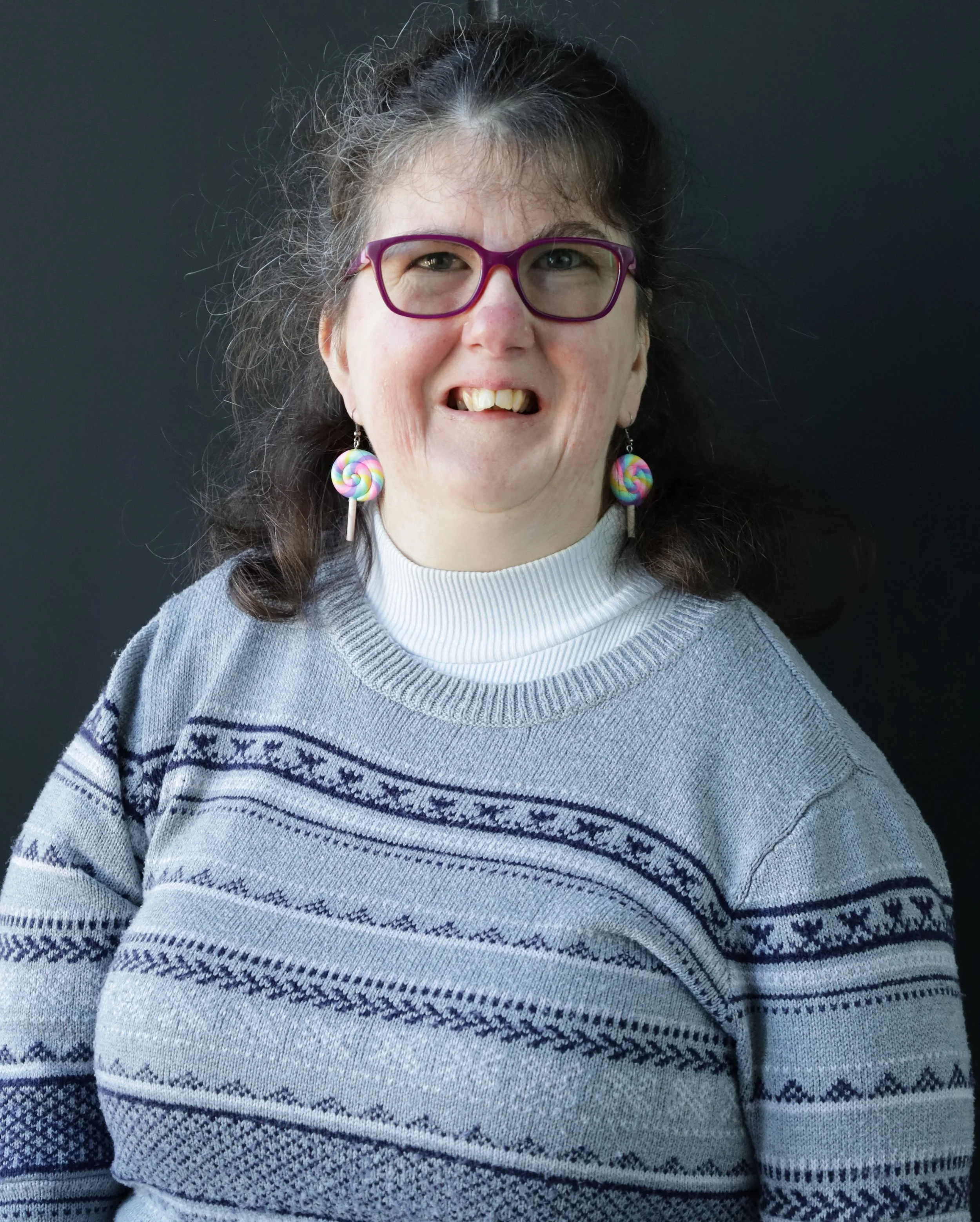
Laetitia L Thompson is a Western Australian writer with a Bachelor of Arts in English, Creative Arts, and History from Murdoch University. Most recently, she was a Writer in Residence with the City of Swan in mid-2026.
She writes historical and urban fantasy, fuelled by a lifelong love of folklore that she blames on a childhood obsession with all things Arthurian and '80s dark fantasy.
She could talk for days about anime, particularly the representation of disability and the design of prosthetics and gadgetry in the medium. She hopes to bring that same care to her own fiction, writing disabled characters who simply get to exist as people.
Her appreciation for well-written characters has, unfortunately, resulted in a lifetime of poor life choices where morally grey, dark-haired fictional characters are concerned.