

The India That Should
Ekta Sonawane
On the afternoon of 26 February 2025, it was a warm cloudy day in Kolkata. It felt that the city's hot and humid pre-summer heat had already arrived. I had come to meet Sanchayan Majumdar, a 34-year-old trans man, for an interview about something as mundane as gyms. The story was about how gym infrastructure in India fails the transgender community. Such an assignment should not take more than two hours – at least I thought that. But little did I know that finding a place to sit would take almost as long.
We tried first the banks of the Hooghly river, on the steps outside Abanindranath Tagore's garden house. It was a 19th century heritage site where, I assumed, there would be quiet corners and river breeze. To my disappointment – there was neither. The mosquitoes were large enough to inspire genuine alarm, and the tourist crowd made it impossible to record anything above a whisper.
It was also a festive day. It was Maha Shivratri – the festival of Shiva, the god who embodies ardhanarishwara, half man, half woman, the divine made whole through the union of opposites. The streets were bustling with loud music and processions. The classic chaos of a city celebrating. Sanchayan, who was fasting for the festival, drove me on his scooty through all of it, looking for a corner that would hold us.
We found one eventually. It was a restaurant, nearly empty, with folded tables stacked against the wall. We asked the person at the reception if we could sit there, in that unused corner. They said yes.
For the next two hours, a fasting trans man on a Hindu holy day sat across from me and talked. Before we began, he apologised. "I am sorry I can't take you home," he said. "I feel bad. But I won't be able to give this interview freely there." I told him it was fine.
It was indeed more than fine. But his discomfort with his home stayed with me – pushing me to think more about it. I have heard different versions of that sentence from queer people again and again over the years. Not everyone said it aloud or in exact words. But it lingered beneath countless interviews, so I cannot speak freely here.
Sometimes 'here' meant a family home. Sometimes it meant a workplace. Sometimes it meant a neighbourhood. Sometimes it meant the country itself.
This essay is my journey covering queer India as a queer Dalit journalist – documenting and living the realities I reported. I spent two years reporting on queer lives in India at a time when many in the community were fighting battles on multiple fronts. From familial violence, never-ending bureaucratic processes to the storm that takes shape inside one's own body.
I reported these stories because they mattered. But home never fit into a byline or a word count. It was one of the questions that appeared most often in my reporting – no matter what story I was covering. Not because I asked it directly, but because every queer person seemed to be searching for it – or had done so in the past.
For many queer people in India, home is not something inherited. It is something painstakingly built—against prejudice, against bureaucracy, against social norms, and sometimes against one's own loneliness. I have often heard people say that queer people are great hosts. And I agree with that. One of my transwoman friends has a unique inability to cook only for herself. But if she is told that she has to cook for a bunch of people and host a party, she cooks and serves an extravagant meal and makes the day unforgettable. After a lot of coaxing, she finally revealed why she does that. Offering this kind of warmth and care is her way of dealing with her own loneliness. An experience that no one can take away from her. But I always felt she was going that extra mile only to offer people something that she never had – a celebration at home.
I met people who were searching for homes in unfamiliar cities. I also witnessed Dalit, Bahujan, Adivasi, and Muslim queer individuals carrying multiple, overlapping forms of exclusion into every conversation about belonging — excluded from their families for being queer, excluded from queer spaces for being poor, excluded from public life for being both. Not the absence of shelter. The absence of home.
The struggle of not having a home as a queer person is as much internal as it is external. I met people trying to make peace with their bodies after years of shame and violence. I have witnessed the self-harm marks left behind on wrists and stomachs because a trans person was not feeling at home in their own skin. Again and again, I encountered people finding and building homes by gathering strength after every act of violence and every discrimination they had experienced.
Sometimes home is a rented room with peeling paint and a lock that finally belonged to them. Sometimes it was a WhatsApp group full of friends checking in on each other. Sometimes it was a partner waiting for dinner after a difficult day. Sometimes it was a chosen family gathered around a table sharing food, and gossip.
For many queer people, home is not something inherited. It was something built. And building it required labour. That labour rarely enters public conversations about queer life. We speak often about rights, legislation and court judgments. We speak less about the everyday work of creating belonging.
The work of accompanying someone to a hospital because they are afraid to go alone. The work of imagining a future in a society that frequently tells you that you should not exist. And alongside this labour, there was joy.
So much joy.
Joy was not the opposite of hardship. It existed alongside it.
What I witnessed across two years of reporting was not just personal struggle. It was the daily consequence of rights withheld. The Supreme Court declined to recognise marriage equality, leaving queer people without the legal scaffolding that most families take for granted — inheritance, adoption, medical decisions, the simple right to be named as someone's own. The Transgender Persons Act promised dignity on paper but delivered it unevenly, if at all. Behind every bureaucratic delay, every rejected ID card application, every hospital that turned someone away, was a person who had been told by the state that their life was a lesser priority. Home, for many of the people I met, was not merely a place. It was a right they were still waiting to be granted.
In December 2024, I travelled to a small city in Maharashtra to report on glutathione – a fairness drug. I spoke with many trans women there to understand their quest. Why was it so important for them to become fair? What was it that made them unbothered about the authenticity of the drug or interested in knowing the science behind it? Archana – the protagonist of my story – gave a very clear answer to my question. She loved a boy who was set to get married in the next couple of weeks. Archana had dreamt of having a home with this man. She wanted marriage, family, love and to build a home with this person. But when that dream didn't seem to be coming true because of social prejudice, she decided to invest every bit of herself in her appearance and make sure she became more beautiful than the wife of her lover.
Archana described everything to me with a smile on her face and so much joy — joy she was directing entirely toward becoming the ideal version of herself. I witnessed that joy in her resilience even as she was cursing the person she loved with her whole heart and was about to witness his marriage, and as the dream of her home was collapsing in front of her. These observations rarely made it into my stories. Not because they were unimportant. But because journalism works within its own constraints.
A quote about discrimination is easier to fit into a news report than an hour spent laughing with friends. A court judgment is easier to document than the feeling of safety someone experiences when they enter a room full of people who understand them. But those moments mattered. They were evidence too. Evidence of endurance. Evidence of imagination. Evidence that queer lives are larger than the systems that seek to constrain them.
As a Dalit queer reporter, I often thought about visibility and invisibility.
Who gets seen.
Who gets heard.
Whose stories become part of the public record.
Many of the people I interviewed occupied multiple margins at once. They were queer and poor. Trans and unemployed. Dalit and displaced. Muslim and gender non-conforming. Their lives resisted easy categorisation.
So did mine.
The first time I set foot in Kolkata was in April 2024. Summer had already begun to settle over the city. The air was thick with humidity. I was there looking for a rented apartment.
After weeks of searching, we (me and my partner) finally found a spacious flat that fit our budget. It was bright, airy, and beautiful enough that I had already started decorating it in my head. I could picture where the bookshelves would go, where we would place our plants, and how the empty rooms would slowly become ours. The deal was almost final. Only the paperwork remained.
Then my phone rang. The man on the other end introduced himself as the owner of the flat and the secretary of the housing society. "How can I break the rules and rent my house to a Muslim?" he asked. He went on to explain that he was a Marwari and that renting his flat to a Muslim family was not something he wished to do.
The second house we liked was in a Muslim-majority housing society. This time, I thought things might be easier. They were not. The owner had a problem with my Ambedkarite and queer politics. I had never disclosed my political beliefs during our conversations. There had been no reason to. But somewhere along the way, he searched my name online, found my reporting and public writing, and decided that was enough reason to refuse us housing.
Two homes.
Two rejections.
Two different prejudices.
The search continued.
For more than a month, house-hunting consumed our lives. Every promising lead came with a fresh set of questions. Who are you? Where are you from? What do you eat? What are your politics? What is your religion? Who exactly will be living here?
Finding a house increasingly felt less like a financial transaction and more like an exercise in proving that we deserved to belong. Eventually, we found a flat. But even that came only after intense scrutiny from the housing society committee and after agreeing to a rent well beyond what we had initially budgeted for.
Today, we live in a rented apartment in a Muslim housing society governed by a long list of restrictions and expectations. There is always an awareness of being watched, assessed, and measured against norms that were never designed with people like us in mind.
The orthodoxy surrounding us has slowly taken away some of the simple joys of living openly as a queer person. Home, the place that is supposed to offer comfort and freedom, often feels like another site of negotiation.
And yet, despite everything, home keeps getting made. In rented rooms and WhatsApp groups. In restaurant corners. In the kitchen of a transwoman who cannot cook for one but will feed a room full of people without hesitation. In Archana's smile as she spoke about a future that the world kept telling her she could not have. These are not small things. They are the architecture of survival. And somewhere inside all of it — inside the bureaucracy, the prejudice, the loneliness, the joy — there is a version of India that its queer citizens are building. Not the India that exists. The India that should.

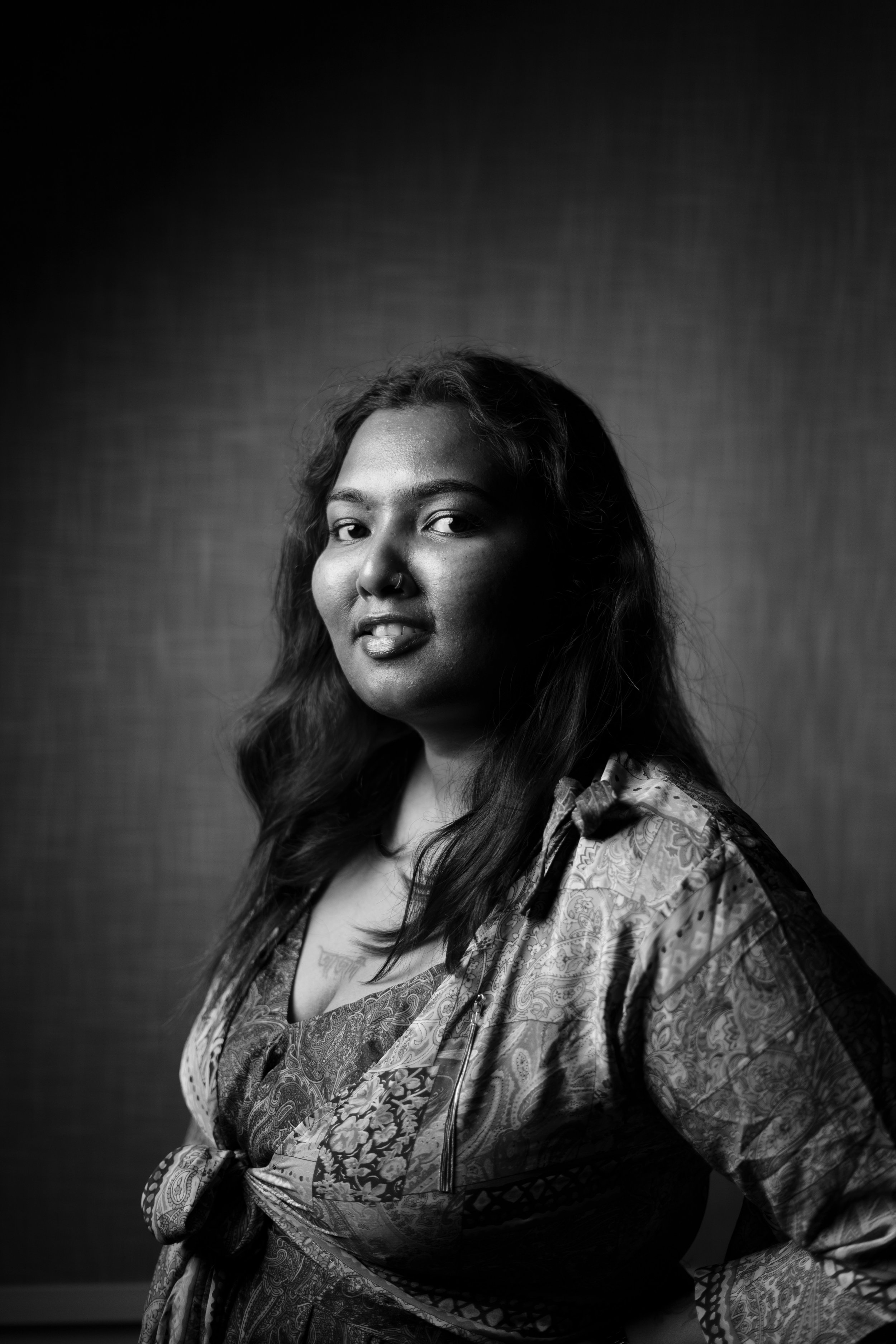
Ekta Sonawane is an independent journalist and researcher passionate about exploring the intersection of caste, class, gender and religion. With a keen eye for uncovering nuanced narratives, Ekta challenges the traditional notion of objectivity and advocates for an inclusive approach to storytelling. Their work delves into the complex layers of systemic inequality and aims to amplify marginalised voices and inspire critical conversations around social justice, human rights and equity.