

The Cost of Being Seen
Stevie Lane
I remember the first time I was counted in.
I was completing an online application form for a volunteering position. Most of the questions were routine; name, address, date of birth. Then I arrived at a question that stopped me – gender. The options were male, female, and non-binary. Today, this might not seem remarkable. But over a decade ago, I stared at the screen for several minutes. For years, I had been quietly circling the possibility that I might be non-binary. The thought would emerge, linger, and then retreat. I could never quite bring myself to claim it. There always seemed to be some lingering uncertainty, some reason to hesitate. Yet, when confronted with the question right in front of me, I knew selecting male or female just didn’t feel right. For the first time, I was being asked directly, and the answer suddenly felt obvious. Of course, I was non-binary.
The experience was unexpectedly profound. Looking back now, I can see why that moment felt so significant. The form did not create my identity but is it helped make it intelligible. Judith Butler argues that bodies do not exist outside the meaning societies attached to them. Categories are not merely descriptive; they shape the possibilities through which people come to understand themselves and be understood by others. The inclusion of “non-binary” on that form did more than collect information. It signalled that a particular way of being in the world was imaginable, recognisable and real. In that moment, being counted felt affirming.
12 months later, I found myself struggling to find work. I ended up getting a job working for the Australian Bureau of Statistics as a Field Officer in the 2016 Census. For months I walked suburban streets carrying census forms. I knocked on doors, explained deadlines, answered questions and reassured people that completing the Census was quite simple. My role was to help ensure every person in my local area was counted. Yet, each evening I returned home knowing that I wouldn’t be. In the 2016 Census, there was no sexuality specific question. Same-sex couples living together could technically be counted, but this was far from the full picture. The “sex” question conflated sex and gender. For those of us who did not fit neatly into the “Male” or “Female” binary, the process required an additional step: contacting the Census Inquiry Service to request access to a separate form that included an “Other” option and space to describe our identity. When I called, they didn’t have any idea what I was talking about and struggled to figure out a way to help me. Paper-form respondents who did not identify as male or female (or rather, a man or a woman), were advised through information which was not included on the form itself, to leave both boxes blank and write in their response to the side. Naturally, sex, or rather gender diversity, was widely underreported, and the data couldn’t be used to create any kind of positive impact for our communities.
The barriers deliberately placed in the way of genuine inclusion in this Census did not mean I, or others like me, moved through the world unnoticed. While the state’s categories failed to recognise me as myself in any meaningful way, my gender nonconformity and sexuality were and are, often visible enough to invite scrutiny and questioning from strangers in my day-to-day life. Sometimes people can’t quite figure out what they are looking at. I can often see the gears turning. Is it a dyke? A fag? A butch woman? A feminine bloke? She, he or it? They aren’t always sure, but some of them are certainly determined to find out.
One day, while delivering Census forms in 2016, I approached a house expecting another routine interaction of the job. I knocked on the door and politely waited as a dog erupted into barking somewhere inside. The barking grew louder, rushing toward the front door alongside hurried footsteps and a strained voice trying to rein the dog in. The door opened, and the dog continued to bark, even louder now without the barrier of the door between us. Standing in the doorway was a weathered looking man in his forties with greying hair, unshaven stubble and the kind of expression that suggested my presence was an inconvenience. As I launched into my well-rehearsed spiel, I could see him looking me up and down trying to make sense of me. His eyes narrowed, and a look of suspicion settled across his face. I had barely finished when he launched into questioning me.
“What do you think about homosexuals getting married?” he said.
I smiled awkwardly as I tried to redirect the conversation back to why I was there.
“I’m just working today with the ABS so it’s not my place to talk about that,” I responded.
“Seriously though, do you think it is right?” he said, in a tone that let me know he definitely didn’t.
“What are you?” he continued.
The question was not curiosity, it was accusation. I didn’t fit neatly into the gender binary, man or woman, and he didn’t like it.
I remember him towering over me, asserting his masculinity, puffing his chest, and with a knowing look on his face like he was about to catch me out in a lie.
I attempted to leave; he moved with me. I remember mentally calculating the distance to the gate from the enclosed veranda I was being backed into. My heart was beating out of my chest. He couldn’t care less about the form in my hand; he just wanted to interrogate me. I eventually got away, not without first thanking him for his time, and never knocked on that door again. Still, every time I walked down that street from there on, I felt a knot in my stomach. As we are often told - data matters, and that is something I truly believe as well. It shapes policy, funding decisions, service provision and public understanding. Communities that are invisible with official statistics often become invisible within decision making processes as well. Yet standing on that veranda, trapped between a stranger’s demands and safety that suddenly felt too far away, I encountered another reality. Sometimes visibility simply makes you a target.
This tension sits at the heart of contemporary debates about LGBTIQA+ data collection and human rights. International human rights frameworks increasingly emphasise the importance of collecting data about marginalised populations. This reflects a broader shift in how human rights are understood and implemented. While early human rights instruments focused primarily on establishing universal human rights, contemporary human rights practice increasingly recognises that formal equality alone is often insufficient. It is difficult to identify discrimination, measure progress, allocate resources, or hold governments accountable if the experiences of particular communities remain invisible within official statistics. It is argued that Governments cannot effectively address inequalities they refuse to measure. As a result, international human rights bodies have increasingly argued that data can play an important role in revealing inequalities that might otherwise remain hidden.
This approach can be seen across a range of contemporary frameworks. The United Nations’ 2030 Agenda for Sustainable Development emphasises the importance of disaggregated data through its commitment to “leave no one behind”, recognising that progress cannot be meaningfully assessed if certain populations are absent from the evidence base. Similarly, the Office of the High Commissioner for Human Rights has developed human rights indicators frameworks that rely upon data to monitor the realisation of rights and identify patterns of discrimination and disadvantage. The Yogyakarta principles plus 10 extend this logic to sexuality, gender identity, gender expression and sex characteristics, recognising the role that appropriate data collection can play in understanding and addressing inequalities experience by LGBTIQA+ communities.
Yet the assumption that visibility is inherently beneficial warrants closer examination. Michel Foucault’s work offers a useful lens through which to understand this contradiction. Foucault argues that visibility is not simply about recognition; it is also a mechanism through which power operates. His famous observation that “visibility is a trap” emerged from his analysis of the panopticon, a prison design in which inmates never know when they are being watched and therefore modify their behaviour as if they are always under surveillance. For Foucault, the power of visibility lies not in the observation itself, but in the way people become knowable, classifiable and governable. Through this lens, data collection is never simply about counting people. The act of collecting information also involves defining categories, determining who belongs within them, and producing knowledge about populations. To be counted is to become visible to institutions, which means becoming legible and therefore subject to forms of governance, regulation and control. While this process can support recognition and inclusion, Foucault reminds us that is can also be used to discipline, monitor and manage populations deemed different, deviant or undesirable.
For LGBTIQA+ communities, this is not merely a theoretical concern. Long before governments and human rights bodies began advocating for the collection of data to better understand our communities, data was collected to identify, criminalise, pathologise and eradicate queer, trans and intersex people. These practices were often embedded within broader colonial systems of governance that used censuses, legal records and administrative classifications to make populations legible to the state.
Many societies have long recognised gender diversity, including Hijra communities in South Asia, Brotherboys and Sistergirls in Aboriginal and Torres Strait Islander communities in Australia, Two-Spirit peoples in North America and fa'afafine, fakaleitī, fakafifine throughout the Pacific. Colonisation sought to suppress these identities through the imposition of rigid, Western understands of sex, gender and social roles. Under the Nazi regime, police and government agencies compiled records and “pink lists” of people suspected of homosexuality, using surveillance records, witness statements and administrative files to identify, arrest and imprison them, with an estimated 10-15,000 being killed. Similar patterns emerged during the Lavender Scare in the United States throughout the 1950s and 1960s, a period of anti-communist and anti-homosexual hysteria in which thousands of suspected gay and lesbian federal employees were investigated, dismissed and deemed security risks. In many countries around the world, convictions for homosexual offences, including dressing in clothing of the “opposite sex”, were routinely recorded and often published in newspapers, exposing individuals to public shame, unemployment and social exclusion. Medical institutions likewise have extensive records diagnosing people with “sexual deviance”, “transsexualism” or “gender identity disorder” among other diagnoses over the years and have been subjected to conversion practices and psychiatric interventions. Some of these practices continue today and have not been legally banned. For example, people with innate variations of sex characteristics continue to be diagnosed with disorders of sex development (DSD) and in much of the world, these babies and children can still be subjected to unnecessary medical interventions without their personal informed consent.
Scholars have long argued that data collection does so much more than simply record social reality. It helps construct it. Categories determine who becomes visible, how populations are understood, and which identities are considered legitimate. Counting is therefore never simply a technical exercise; it is a political act. The 2026 Census in Australia will, for the first time, include questions relating to sexuality and gender for people aged sixteen years and over. For many LGBTIQA+ Australians, this represents a significant milestone. After decades of statistical invisibility, there will finally be an opportunity to appear within Australia’s most influential population dataset. Yet, this Census also reveals limitations in its exclusion of a question about innate variations of sex characteristics. As a result, intersex Australians will, for now, remain statistically invisible within the nations primary population count.
I suspect the number of LGBTQA+ Australians captured by the Census will still be smaller than our lived reality. Some people will not feel safe disclosing who they are. Others will make a conscious decision not to. I understand that hesitation. As Kevin Guyan argues in Queer Data: Using Gender, Sex and Sexuality Data for Action (2022), the question is not simply whether data exists, but what that data does, who controls it and whose interests it services. A society with more data about queer people is not automatically a society that is better for queer people.
I still don’t know whether I will share my sexuality and gender in the 2026 Census. I have not legally changed my gender to non-binary despite that now being possible where I live and am from. I do not have an ‘X’ marker on my passport; it is not something I’ve ever felt drawn to. While I hold a great deal of privilege, I am still a queer and trans person living in a world where visibility can carry consequences.
The rise of digital technologies has introduced new risks that previous generations could scarcely imagine. Data breaches, algorithmic profiling, facial recognition systems, border technologies, artificial intelligence and targeted political campaigns all create new opportunities for personal information to be used in ways that most could never anticipate. Information in moments of progress can persist into moments of backlash. The permanence of digital records means that questions about who holds data, who accesses it and how it is protected have become increasingly important.
Part of me wants us to be counted so that we can point to the numbers and say look, we are here. You tried to silence us, erase us and legislate us out of existence, yet we are still here. But another part of me resists the idea that our humanity should require statistical proof in the first place. Inclusion within systems of data collection does not automatically dismantle the structures that produce inequality. Being counted is not the same as being safe.
We are living through a period of escalating anti-queer and anti-trans rhetoric and violence, and our rights are constantly being questioned and taken away. In that, is a question that continues to trouble me. How many of us need to exist before our rights are respected? How many people need to be counted before conversion practices are prohibited everywhere or people stop being fired from their religious workplaces for being queer? How many trans people need to appear in datasets before access to gender-affirming healthcare stops being treated as a political controversy? How many survey responses are required before governments and institutions recognised our humanity? There is something deeply unsettling about the expectation that marginalised communities must continually prove our existence before being afforded dignity. Human rights should not operate according to headcount. The right to live free from discrimination should not require evidence that harm has occurred. Whether there is one of us, one hundred of us or millions of us, our humanity shouldn’t be considered more real because there are more of us.
I often think back to that volunteer application all those years ago. A simple form asked a question that changed my life. For the first time, I saw a possibility that I had not yet been able to name for myself. In that moment, being counted felt like recognition. It felt like freedom.
I hope one day it feels like that again.

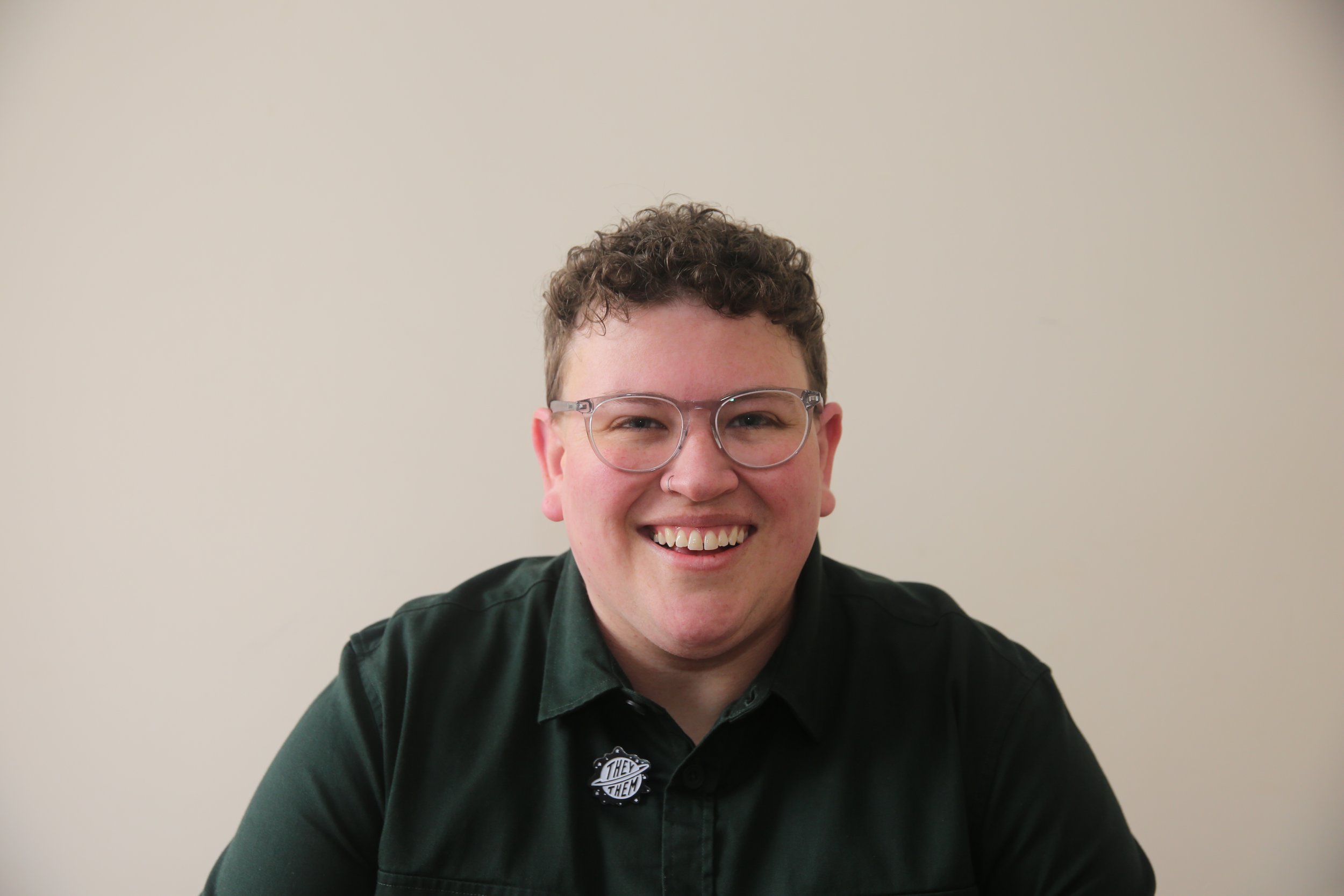
Stevie Lane is a queer, trans, and non-binary writer and researcher based on Whadjuk Noongar Country in Western Australia. Their writing explores human rights, LGBTIQA+ identity, disability, and belonging. Twice shortlisted for the Portside Review Human Rights Essay Prize, Stevie’s work has also appeared in Bent Street, Out in Perth and The Conversation. They have also published academic research on neurodivergent students and trans and gender diverse inclusion in higher education, and are currently studying with the Centre for Human Rights Education at Curtin University.